Showing posts with label medical education. Show all posts

Friday, September 27, 2019

"Do you have any questions?" Part 3 of 3 - evaluation, program metrics and well-being questions to the interviewer

In the last 2 blog posts, we looked at questions that I very much encourage you, the residency applicant, to ask the interviewer. These questions pertain to clinical experience during residency and teaching/learning and research opportunities. Here is the third installment to this post where we add more questions to your bag of questions that you can confidently ask the interviewer and show your interest and commitment to the program where you are interviewing.

"How is my performance evaluated during residency?" "Do I get face-to-face evaluations or written feedback?" "Besides the teaching attendings, are there others such as chief residents or nurses who may be evaluating me?" "Do I have scheduled meetings throughout the year with the program director for feedback?" During residency training, your performance as a physician in training and as a person are being closely monitored at work at all times by your colleagues, medical students, teaching attendings, subspecialty consultants, non-teaching attendings, nurses and hospital staff.  Your evaluations during residency are critical in shaping you to be a wonderful physician. If that doesn't motivate you enough, you need to maintain an impeccable profile because residency evaluations are critical in obtaining a fellowship or a clinical practice position in an academic or private setting. Residency evaluations may be available to you in a written form [using platforms such as New innovations] either because of lack of time or interest to have a face-to-face conversation. Make sure you have ample opportunities during residency to receive constructive feedback and do your very best to act on these evaluations.


"What was the boards passing rate for the last class that just graduated?" "Are you satisfied with the boards passing rate for the recent graduates?" "Does the program have separate board review sessions or is it incorporated into the other teaching conferences?" "What resources or board prep materials are provided by the program?" After you complete your residency, you become eligible to take the boards [also called the 'initial certification exam'] administered by ABIM [for internal medicine] and other similar boards to become a "board certified physician". If there is one objective metric that very quickly tells you (and a layman) how effective is the teaching environment and culture in a residency program, it is the Boards pass rate.  Every program cherishes to have a 100% boards pass rate. While some may argue that the individual performance on the boards is a reflection of the graduated resident and his or her test taking skills, if a program has a lower than median boards pass rate for that specialty, it needs to implement changes in the teaching curriculum to improve the performance. Here is a link of publicly available board pass rate in internal medicine and you will find a rare program that had a 64% board pass rate, a very concerning program metric. In my opinion, >90% board pass rate is very good.

"Could you let me know about the previous graduates and what career paths - fellowship, research or private practice have they pursued after residency?"  This is again a good question to ensure that your career path aligns well with the general trend in the program.  For example, if you wish to be a private practitioner in a community practice, then it's not very necessary to work at a large academic medical center that is focused on research grants and publications. To meet your goal in this scenario, you want to be in a community hospital where you will be exposed to different styles of clinical practice. Similarly, if your goal is fellowship or an academic career, then matching at a program that offers no fellowship or limited research opportunities could make you miserable. A lot of programs do provide information on recent graduates on their website or may highlight this information before the interview. However if this has not been discussed, make sure you ask either the program director or any other interviewer. As in my prior post, use all available resources such as the program website, YouTube, Twitter, Facebook to learn as much as you can about the program before you interview.

"Could you let me know how the program helps me match into a fellowship or a clinical practice position after residency?" In the current times with information overload and a lot of noise, it is possible that your stellar application may be ignored by a potential employer.  To avoid this, you need to engage the networking skills of your program director another teaching attendings to help you land the position that you desire.  Asking this question gives you an idea of how committed and invested is the program in ensuring your success. Are they willing to pick up the phone and market your resume and reach out to their contacts? Or are you going to be on your own? Ask any graduating resident and everyone agrees that this support from the program and the program director works wonders.
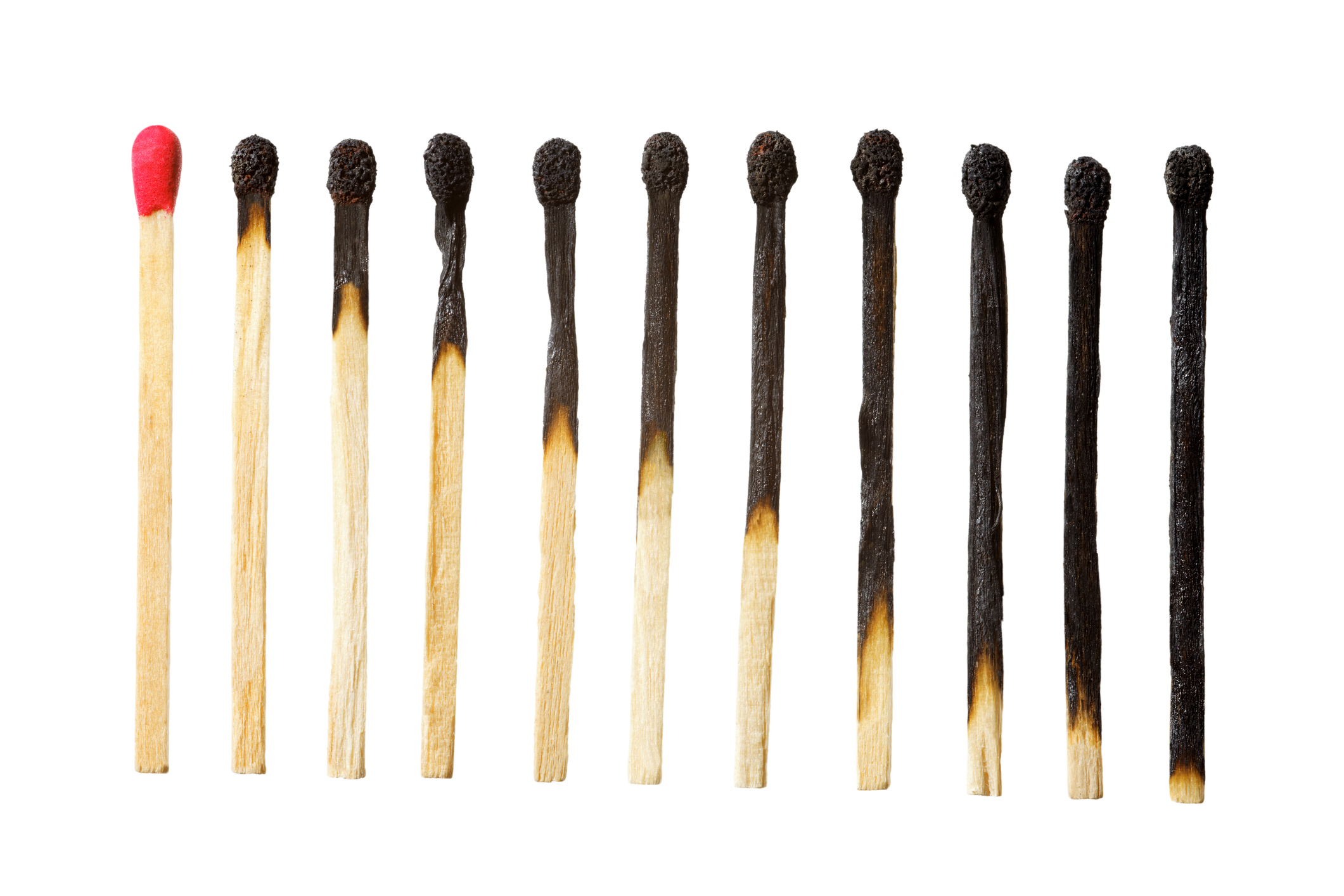
"How does the program foster well-being among its residents?" " Am I assigned a mentor during my entire time in residency? Is the mentor in the same or a different specialty?" Residency training can be tiring and arduous. The long work hours, nature of clinical responsibilities, electronic medical record use are alleged to be some of the drivers of burnout. Burnout and emotional distress have generated a lot of discussion in the media.  Studies indicate that about 50% of residents experience burnout that some consider to be a precursor to depression. It is absolutely imperative that your mental health and emotional well-being during residency training are in the best shape possible.  This allows you to be productive during the long working hours of residency. After you ask this question, assess the interviewer's response to this question. Do they deny that burnout even exists? Are they willing to work with you?  Is employee and family assistance program [such as a counselor] available around-the-clock? I myself experienced a distressing situation of a patient death and was able to get back to my life and work after reaching out to EFAP at my hospital. There should be absolutely NO stigma in asking for help. Find out how easily approachable are the program director, chief residents and any other teaching attendings. "Does the program have events to promote collegiality between residents such as social events or outdoor events?" You may also add to this question by letting the interviewer know how you choose to maintain emotional well-being. If you family, friends or relatives in the area who can offer you social support, make sure the interviewer is aware of this fact as this is a strong reason to rank you. If meditation, yoga, exercise, music, art or outdoor events such as hiking or skiing helps you build resilience, do let the interviewer know this. In short, be prepared to answer back if the interviewer asks you about your coping mechanisms.

That is it for now.  I hope that these three posts provide you with a variety of questions and the rationale behind asking the interviewer. You don't need to ask each and every question but would be great if you could ask an appropriate question in the right circumstance. For example, if the interviewer is talking about the collegiality among residents and faculty, a question on resident well-being would be most appropriate and so forth. All the best!

Before you go: Here's your golden opportunity to have your voice heard! Write down your ONE question regarding your US residency program application, personal statement, interviews or anything that has been bothering you and keeping you up at night. You can reply at the end of this post or message at my Facebook page or email me at varun@ed4medus.com

The top 10 popular questions will be featured on my next blog posts at https://ed4medllc.blogspot.com/ and the winners will receive a coupon each for a FREE practice interview at Ed4medus.com ! Put those thinking caps on and hurry up!


Photo credit for images in this blog post: https://www.evaluationforms.org/wp-content/uploads/Performance-Evaluation-Form-Feedback.jpg
https://static1.squarespace.com/static/5c468830b105986dd083f052/5c4693bbf950b7a96faf71bf/5d2e06f9cf8a34000150c890/1563369535299/ra-graphic.png?format=2500w
https://ldaamerica.org/wp-content/uploads/2015/05/1370738959078.jpg
https://content.thriveglobal.com/wp-content/uploads/2018/11/GettyImages-175268984.jpg


Sunday, September 22, 2019

'Do you have any questions for me?' Part 1 of 3 - teaching and research questions


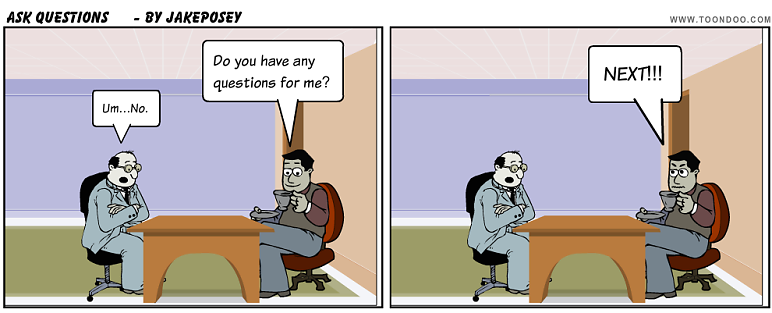
So you have made it to the residency interview. Congrats! The interview is going well and you have said everything to the interviewer that you planned you say. As the interview comes to an end, the interviewer then throws "Do you have any questions for me?" at you. How should you tackle this question - should you choose to be modest and not trouble the interviewer or is this another opportunity to shine at the interview? Read on.

On the surface level, 'Do you have any questions for me?' seems a a very benign question. In my opinion, the interviewer is giving you yet another chance for you to show your interest in the program and your critical thinking skills.

Before you go for any residency interview you have a lot of information accessible to you through the programs website, emails sent to you by the program coordinator, YouTube, twitter, PubMed, local information about the town, climate, jobs, schools, safety and so on. So while you don't want your questions to be redundant and boring, asking the right questions can demonstrate your interest in the program and commitment to excel in your career.

In my online practice interviews at Ed4MedUs.com (schedule your practice interview here), these are some questions that applicants have practiced asking me (and I would like to be asked) as an interviewer.

General questions:
The best questions in my opinion are in the form of “I read on your program's website that your program does such-and-such – could you tell me more about that?” Again, this shows that you're interested in the program and have taken the pain and effort to review the program website or materials.

It is nice to ask the program director as to "what major (or significant) change are you anticipating in the next few years?". Here you could also ask about any changes in the teaching methods or research opportunities that may become available in the near future. But do remember that some of these changes may not happen during your time in residency, so take this with a grain of salt.

Teaching:

"What are the teaching conferences that I will be attending (or participating) in?". This question may be partly answered during the morning introduction to the program by the chief resident (or the program director). "How frequent are the morning report and noon conferences?" - these are the traditional bread-and-butter teaching styles in any residency. However, lately there has been a lot of debate on the educational value of these conferences as residents usually get paged by the nurses and honestly because of our rapidly declining attention span. Some programs have chosen to have academic half days where the residents have protected learning time and are not to be disturbed during these conferences. If the program that you're interviewing at does not have academic half days, ask the program director if they are considering this in the future. Or if they do have academic half days that they started very recently, asking them a question such as "I noticed that the academic half days were just started last year. How is that working out for the residents and are you planning to continue it or make any enhancements?"

Other teaching activities include sub-specialty rounds, grand rounds and M&M (mortality and morbidity) rounds. See if the program is engaged in any of these teaching activities. A schedule of teaching conferences is usually handed out to every applicant and does not need to be asked to every interviewer, especially a sub-specialist consultant. Make sure you are fully aware of all the learning opportunities as well as your teaching responsibilities as you certainly will be asked to present cases at morning report or a paper at journal club.

If not answered already, ask the interviewer "I have an interest in teaching medical students. Would I have opportunities to do so?" This can be a very enriching experience and is great for your resume if you're considering an academic career. Some residents volunteer in an adjoining medical school to facilitate small group sessions. If you have a flair for teaching, go ahead and make sure your interviewer knows about it.

Research opportunities

"What research projects have residents completed?". 
"What research opportunities are available?". 
"Is there a research rotation or protected time for research?" "If so, how many weeks is that?"
"Are there specific faculty members to guide research planning and work during residency?" Every residency program needs to have every graduating resident complete a 'scholarly activity'. This can range from a poster presentation all the way up to a manuscript publication. A resident may choose between an actual research study or a quality improvement project. But to do any of these research activities require a huge investment of time and effort by the resident and commitment by the teaching faculty.

"What are the resources for research or scholarly activity available in the institution?" Some University programs have a Teaching Academy that serves as a formal resource where you can become a protege under a research mentor who guides you through various stages of research such as coming up with a research question, applying to IRB, data collection and analysis, completing the study and presenting the data. You need to realize that you have limited time in residency so please only choose projects that are feasible. PubMed is an excellent resource for all research publications that came out from the institution where you are interviewing. If  you are considering an academic or a research career after residency, make sure that the program where you are interviewing can make you a great doctor and also an excellent researcher. Make sure you are aware of this before the end of the interview day.

Before you go: Here's your golden opportunity to have your voice heard! Write down your ONE question regarding your US residency program application, personal statement, interviews or anything that has been bothering you and keeping you up at night. You can reply at the end of this blog or post a message at my Facebook page.

The top 10 popular questions will be featured on my next blog posts at https://ed4medllc.blogspot.com/ and the winners will receive a coupon each for a FREE practice interview at Ed4medus.com ! Put those thinking caps on and hurry up!


Photo credit for image on top of blog post: https://maria.gorlatova.com/2015/02/pm-job-candidates-please-ask-questions-in-your-job-interviews/


Tuesday, September 17, 2019

'Tell me about yourself' - the classic icebreaker question in any interview


'Tell me about yourself'. Often called an 'icebreaker' or 'elevator pitch', this is an open-ended question you are almost guaranteed to be asked. Lets face it, a residency program director has a lot of applicants to interview (on average, a residency program with 7 spots interviews 95 applicants - click to see my previous blog post). There is no way he or she can remember each and every application. This is of even greater concern for 'guest' faculty attendings who serve to interview intermittently throughout the interview season.

'Tell me about yourself' is an opportunity for you as the applicant to put your best foot forward i.e. say everything you had prepared to say and that you wanted to make sure the interviewer has heard. Did you have an exciting research project or a case report that you are working on? Did you have a very moving experience like working in a disaster area or how you discovered your passion for teaching? Here's your chance to shine.

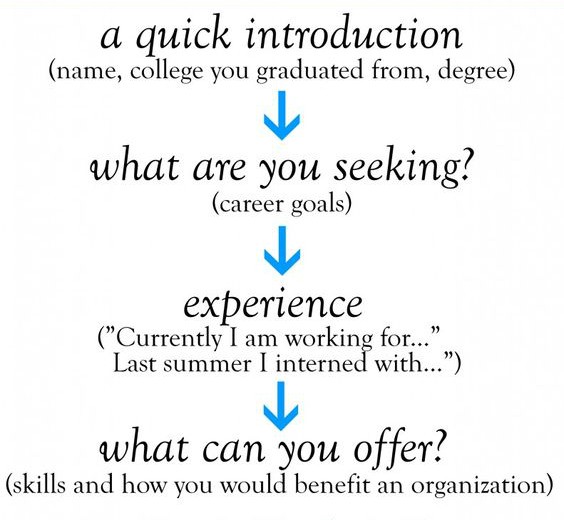
What exactly should you say? Here is a framework:

(Source: https://www.amazinggoodwill.com/hs-fs/hubfs/Marques%20Clark/Elevator-speech-02.jpg?width=564&name=Elevator-speech-02.jpg)

Here is an example from a practice interview that I conducted online at ed4medus.com (schedule your practice interview here)

"I am an international medical graduate from India. After I graduated from med school in 2018, I looked closely at my future career options. Fortunately, my brother who lives in California encouraged me to explore medical residency in US. I talked with graduates from my medical school who are in US and I then decided that the high quality of training, education and research opportunities in US residency would be best for my career.  I took Step 1 and Step 2CK and then landed in Atlanta for US clinical experience. I am currently a research assistant at Emory University in the Endocrinology division. My role is to survey patients with diabetes on their knowledge of hemoglobin A1c. I ask patients if they know what their A1c is and what should be the target A1c. We hope to correlate this data with their actual A1c. I also observe the attendings in their diabetes clinic. Now the reason why I got very interested in internal medicine is that I love pathophysiology. I find it very interesting that I can apply my knowledge of pathophysiology to understand a patient's problem and come up with a treatment plan. I particularly enjoy talking to patients and explaining complex diagnoses in simple terms while being honest and reassuring to them. I am very interested in training in a community hospital program that is just not too big or small and where I can have opportunities for research and fellowship. In fact, I was recommended to apply here by J_ J___ who graduated from this program 4 years ago and spoke very highly about the training he received. I haven't decided which fellowship yet but I find myself drawn to nephrology. I believe that my passion to work hard and train hard in a warm and supportive program will greatly help me grow as a physician." - A.K.


Red flags: Don't make it sound like you gave the exact same speech at another program. You need to personalize your 'elevator speech' to every program. Maybe you have a friend where the program is located. Maybe you know a former grad in that program. Maybe you are interested in the location for your spouse. Maybe you are interested because of school system for your children. Try to give the interviewer as many reasons as possible as to why you would be the perfect fit for their residency program. 

So that's it - what is your favorite response to 'tell me about yourself'. Share your wisdom in the comment box below and I will offer my feedback to your response.

Before you go: Here's your golden opportunity to have your voice heard! Write down your ONE question regarding your US residency program application, personal statement, interviews or anything that has been bothering you and keeping you up at night. You can reply at the end of this blog or post a message at my Facebook page.

The top 10 popular questions will be featured on my next blog posts at https://ed4medllc.blogspot.com/ and the winners will receive a coupon each for a FREE practice interview at Ed4medus.com ! Put those thinking caps on and hurry up!

Photo credit for images in this blog post: https://www.successco.com/images/2008/06/25/meeting_success.jpg; https://www.sacmeetings.org/files/images/students/elevator-pitch.jpg

Wednesday, September 11, 2019

How do Program Directors decide which applicant to interview and rank? Here are the data from a national survey

Have you ever wondered what is a residency program director (PD) really looking for in a residency applicant?  Are they looking for stellar USMLE scores? What about research experience? How important is US clinical experience? Let's look at the available data to answer these questions.

NRMP surveyed PDs in 2018 and scored a variety of factors that a PD looks at when he or she receives a residency application.

Disclaimer: The survey had a response rate of about 30%.  This means that more than two thirds of the program directors did not respond to the survey and there is no way of knowing if those non-responders would act differently from the data summarized below. Also there are subtle differences in how each specialty values these factors in selecting applicants for interview.  You can look up the details pertaining to your specialty of interest in this link.  The following summary takes into account all specialties and is a valuable starting point.


1.  USMLE scores.  94% of residency program directors cite USMLE Step 1 score as an important factor in selecting an applicant to interview with an average rating of importance of 4.1. To me, this was interesting. I wondered if performance in a standardized exam in the 2nd year of US medical school that tests knowledge and application of basic sciences and pathophysiology could reliably predict how good a resident you are likely to be. It's possible that in residency training, having a good foundation of knowledge can help residents build their diagnostic and management skills quickly.

Also 30% of these responding program directors indicated that they would not consider an applicant who failed step 1 on the first attempt.


These data indicate that USMLE Step1 score is very important in enhancing your chances of getting an interview offer.  So what score should you be targeting? The responding PDs in 2018 indicated that Step 1 score of about 235 and above almost always qualifies for an interview, while a score less than 218 generally disqualifies that applicant for an interview.


What about Step 2CK scores? Fewer PDs [80%] considered Step2 CK score important while 94% of the PDs gave more weightage to Step1 score. However, it is difficult to know if this is truly the case (see the above disclaimer about non-responder bias). Similar to Step 1 data, 35% of the PDs would not consider an applicant for interview if he or she failed Step2 CK on the first attempt. Again, a median score of 235 and higher resulted in an interview offer.

My interpretation of this data is that a score of 240 or higher (greater than 75th percentile in this report) should remove any doubts in your mind about your USMLE scores impacting your chance to get an interview. Again remember this is just one of the many other factors in your application that is considered by the PD. 

2.  Letters of recommendation. Letter of recommendation were second most popular among PDs in deciding whether to interview an applicant. PDs certainly want to get a feel for the applicant's professionalism, commitment and their actual performance in clinical rotations.

Think for a moment from the shoes of a PD.  On average, for 7 residency positions in the match, the program receives 904 applications of which 121 qualify for an interview. That is, for every 10 applicants, only about 1 gets an interview letter. Besides using the USMLE scores as discussed above, the PDs also review the letters of recommendation in making this decision.


I would consider it very essential to obtain letters of recommendation from a US physician.  If you are an IMG, these letters are highly regarded and carry much more weight than that from a physician from your home country. While letters from a community physician are helpful, I would recommend working with and obtaining a letter from a teaching faculty member at an academic medical center through an observership, clinical rotation or research opportunity. This also increases your chance of interviewing in that academic medical center and other teaching hospitals especially if the faculty member is well known.  Four letters of recommendation are golden.

The Dean's letter (or MSPE) is also very important as it summarizes the course of an applicant's entire four years in medical school including the basic and clinical sciences.  Here are some examples (example 1, example 2).  The dean's letter also states class rankings as every medical school has its own way of grading the performance of its medical graduate. The Dean's letter typically includes snippets of written evaluations by teaching faculty members and grades to offer a 360 degree evaluation. If you are an IMG, chances are that your dean's letter is going to be very different. See if your medical school is willing to draft a dean's letter as in the specifications and examples above.

3. Commitment to specialty and evidence of professionalism and ethics: This should be evident from your ERAS application, work, research or volunteer experiences and personal statement. Remember that the personal statement should not repeat what you stated in ERAS - it should describe what skills you gained from an experience or how you became a better physician (and person). For example, as an IMG, you should offer details on your observership in your ERAS application. And also, you should describe how the observership prepared you for residency by giving you a glimpse of the interactions between residents and attendings, patient communication, EMR and team management.

4. Grades and class ranking. Are you someone who is just good at taking exams and scoring well? Or have you done well the entire time in medical school? This will be evident by your scores and MSPE/Dean's letter.

5. Research experience: Interestingly, only about 40% of PDs chose to consider research experience in their decision making. That seems quite low. It may be because PDs know that not much meaningful research can be completed during medical school, let alone that it be presented in a conference or published. It is very difficult to complete any solid research in 1-3 months. The most you can do is a survey or retrospective chart review. Quality improvement is another feasible option.

Some other notable findings:

1. Program directors were very clear that if the candidate was 'flagged by NRMP' for irregular behavior or match violation, they would not interview or rank that applicant. Don't get yourself into any trouble.

2. Visa status for IMGs: This was important for some PDs (about 40%). Now this does not mean that PDs are not worried about visa status for IMGs and will call an IMG for interview without looking at their visa needs! You wish. It means that the PDs who didn't need to bother about visa status either (a) are not planning to invite IMGs or (b) are not planning to sponsor a visa anyway or (c) will sponsor only J1 visa that requires little work and expenses from the program standpoint.

3. Personal prior knowledge of applicant: More than 2/3rd of the responding PDs strongly considered this factor in their decision to interview an applicant! This just goes to show that NETWORKING is key! Use all your resources - friends, family, medical school alumni, just anyone really. I remember a shopkeeper once approached me as his nephew was looking for an observership!


That’s all for now. Hope you like this blog. I would love to hear your thoughts and comments. Join the mailing list for the blog or my facebook groups and check out Ed4medus.com to learn more about personalized services to help you get into a US medical residency program.

Before you go: Here's your golden opportunity to have your voice heard. Write down your ONE question regarding your US residency program application, personal statement, interviews or anything that has been bothering you and keeping you up at night. You can reply at the end of this blog or post a message at my Facebook page.

The top 10 popular questions will be featured on my next blog posts at https://ed4medllc.blogspot.com/ and the winners will receive a coupon each for a FREE practice interview at Ed4medus.com ! Put those thinking caps on and hurry up!


Photo credit for image on top of post: http://digitaluniversity.elis.org/wp-content/uploads/2018/04/smart_recruiting.jpg